When the front of the hip stays short, the body has to find that motion somewhere else, and the place it borrows from is usually the place that starts to hurt. In young athletes training heavy hours, tight hip flexors very often show up as knee pain or low back pain rather than as hip pain. The work is to restore the range of motion, reduce the guarding around it, and then give the hip enough strength to hold what was gained.
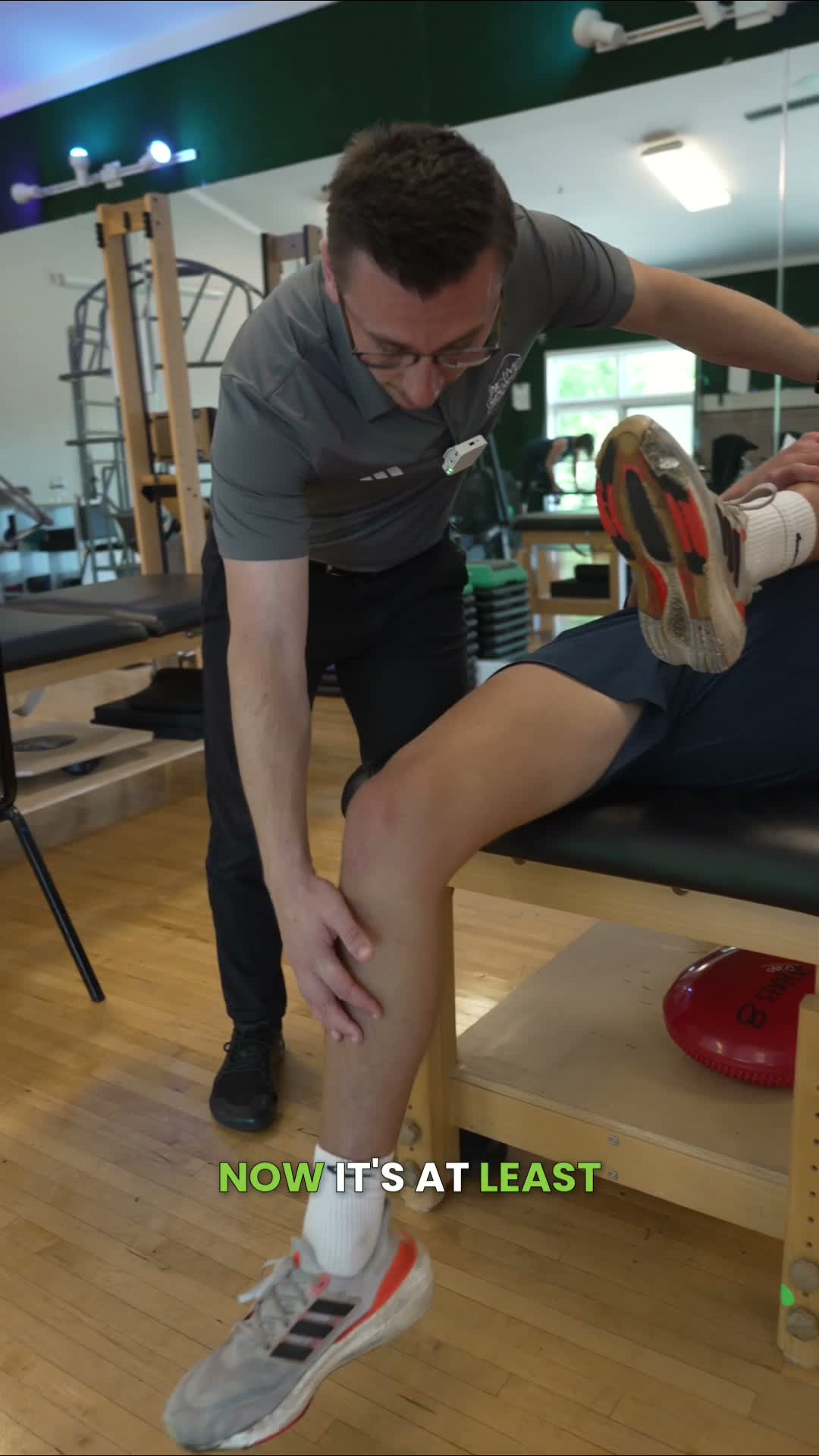
In this clip Dr. Jordan is working with one of our young patients at the end of a visit, talking through hip flexor tightness. Earlier on, the athlete’s leg was hanging virtually straight. In the clip it is sitting closer and closer to 90 degrees. That is a snapshot of where that athlete was in that moment, on that day, and it belongs to them.
What are we looking at when the leg will not drop toward 90 degrees?
We are looking at hip flexor length. With the athlete lying back and one leg hanging off the table, a hip flexor group that has enough length lets the thigh drop toward the floor. When the muscles at the front of the hip are short, the thigh stays up closer to straight.
The hip flexors are the muscles at the front of the hip and the front of the thigh that pull the knee up toward the chest. Sprinting, kicking, sitting in class and sitting in the car all put them in a shortened position, and a soccer schedule does most of that in the same week. A leg that hangs straight out tells us the hip cannot get into extension on its own, which is the position you need every time you push off behind you.
Why does tightness in the front of the hip end up hurting my knee or low back?
Because motion has to come from somewhere. If the hip will not extend, the low back arches a little more and the knee and pelvis take on work they were not built to do. The borrowed work is what gets irritated.
As we said in the clip, sometimes when you are tight for too long, something else starts to do all the work, and when the other area does the work, that is what gets painful. Extremely commonly that ends up as knee pain and back pain. This is why an athlete can have a completely unremarkable knee exam and still have a knee that aches after every session.
| What the athlete feels | What we often find at the hip |
|---|---|
| Knee aching during or after training | Short hip flexors and a quad doing extra work |
| Low back tightness that shows up late in a session | Limited hip extension, with the lumbar spine picking up the slack |
| Pinching in the front of the hip | Limited hip range of motion with guarding around the joint |
Why do I get tight again a few days after treatment?
Because training keeps happening. Range of motion gained in a session is not a deposit that sits there untouched. A hard week of soccer will pull some of it back, and that is normal rather than a sign something failed.
when you’re training like a billion hours a week, it’s just going to feel like some of this does start going back
Some athletes simply recover tight. When they finish training, the muscles shorten up, and by the time they are warmed back up again the next day, their movement pattern and coordination have shifted slightly. That is when the low back and the knees start getting irritated. The answer is not to train less by default. It is to keep the recovery work on the calendar alongside the training, the way you would keep changing the oil on a car you drive hard rather than waiting for the engine light.
What do we actually do in the room for this?
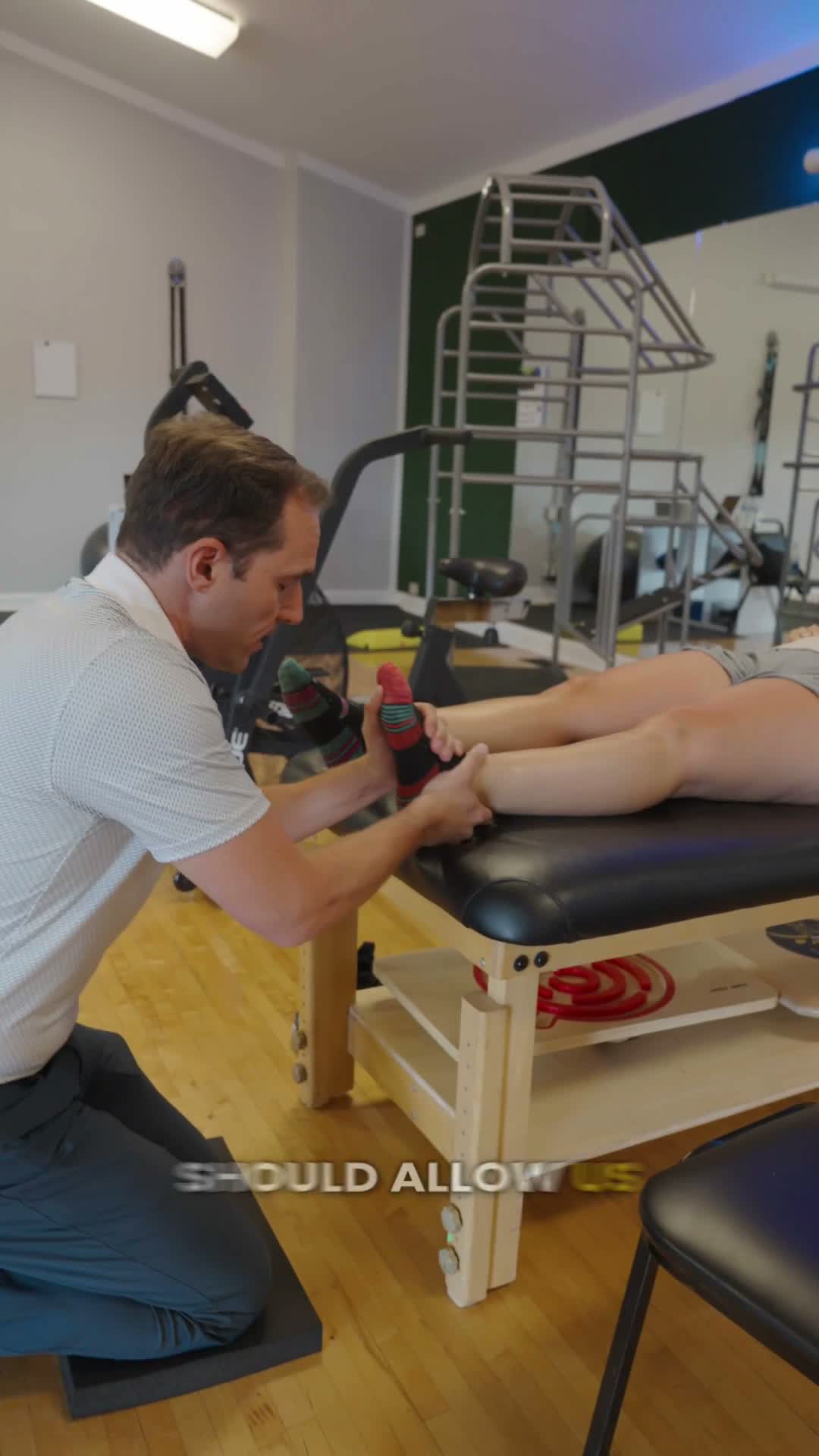
We assess, we treat the tissue that is restricting the motion, we recheck, and then we load it so the new range has a reason to stay.
- Check hip flexor length and hip strength, since tightness in the front of the hip typically travels with a strength deficit.
- Reduce the guarding with soft tissue work, and use dry needling where the muscle is holding tone that will not release with hands alone.
- Recheck the same position, so the athlete can see what changed rather than take our word for it.
- Prescribe the stretches, mobility work and corrective exercise that keep it, and set the expectation that it is ongoing during a heavy season.
- Look upstream and downstream at the knee and low back, since those are usually the areas that have been paying for the restriction.
Dr. Jason sees the same pattern working with the professional athletes at Nashville Soccer Club. The effort an athlete puts into a game shows up as more tightness and more guarding afterward, and the job is not finished, because there is training again the next day. Whether it is a youth athlete, a recreational athlete or a professional, the thinking is the same: find the modifiable things, treat what is restricting motion, and learn what is specific about that person’s body.
Key points
- Tight hip flexors often present as knee pain or low back pain, not hip pain.
- Tightness at the front of the hip commonly comes with a strength deficit, so stretching alone is rarely the whole plan.
- Some athletes recover tight after hard sessions, which changes movement patterns before the next one.
- A single visit gives a snapshot, and heavy training weeks will pull some range back.
- Care includes soft tissue work, dry needling where indicated, and rehab to hold the range.
Frequently asked questions
Why do my hip flexors stay tight even though I stretch them every day?
Stretching adds length, but if the hip is also weak in that new range, the body has little reason to keep it. Many people find that pairing the stretching with strength work through the full range holds better than stretching alone.
Can tight hips really cause knee pain?
They can contribute to it. When the hip does not extend well, the knee and the quad often absorb more of the load, and that area is frequently where the soreness shows up. We assess both before deciding what to treat.
Does dry needling hurt?
Most people describe a brief cramp or twitch in the muscle rather than sharp pain, and some soreness afterward for a day or so. We explain what to expect first and check in as we go.
How often should a young soccer player get looked at during season?
It depends on training volume and how the athlete recovers. Athletes who consistently finish sessions tight often do better with regular check-ins through the season than with waiting until something hurts.
If the front of your hip has felt short for a while, or your knee or low back keeps complaining after training, we are happy to take a look and work out which part is actually restricted. Book a visit here and we will assess your hip range of motion and strength and build the plan around your training schedule. Our Hendersonville office sees this pattern in youth, recreational and professional athletes alike.
Active Sports Therapy · 123 Stadium Drive, Hendersonville, TN 37075 · 615-537-5520
Sources
- Peeler J, Anderson JE. Reliability limits of the modified Thomas test for assessing rectus femoris muscle flexibility about the knee joint. J Athl Train. 2008;43(5):470-476. https://doi.org/10.4085/1062-6050-43.5.470
- Roach SM, San Juan JG, Suprak DN, Lyda M. Passive hip range of motion is reduced in active subjects with chronic low back pain compared to controls. Int J Sports Phys Ther. 2015;10(1):13-20. https://pubmed.ncbi.nlm.nih.gov/25709858/
- Gabbett TJ. The training-injury prevention paradox: should athletes be training smarter and harder? Br J Sports Med. 2016;50(5):273-280. https://doi.org/10.1136/bjsports-2015-095788
- Jayanthi NA, LaBella CR, Fischer D, Pasulka J, Dugas LR. Sports-specialized intensive training and the risk of injury in young athletes: a clinical case-control study. Am J Sports Med. 2015;43(4):794-801. https://doi.org/10.1177/0363546514567298
Transcript of the video
This is the one you see probably the most drastic effect on where he doesn’t have that leg out. I mean remember it was like straight virtually now. It’s at least hanging closer and closer to that 90 degrees. Now, this is only a time time stamp, right?
We’re seeing where it’s at right now overall. We’ve given a lot of stretches a lot of Mobility techniques and different exercises help keep this but when you’re training like a billion hours a week, it’s just going to feel like some of this does start going back and that’s why getting the team here to be able to loosen that up as super important, right?
Leave a Reply