
A tight or guarded muscle doesn’t just feel stiff. It blocks the exact motion that muscle is built to allow, and the fix is working through that specific tissue rather than stretching in general.
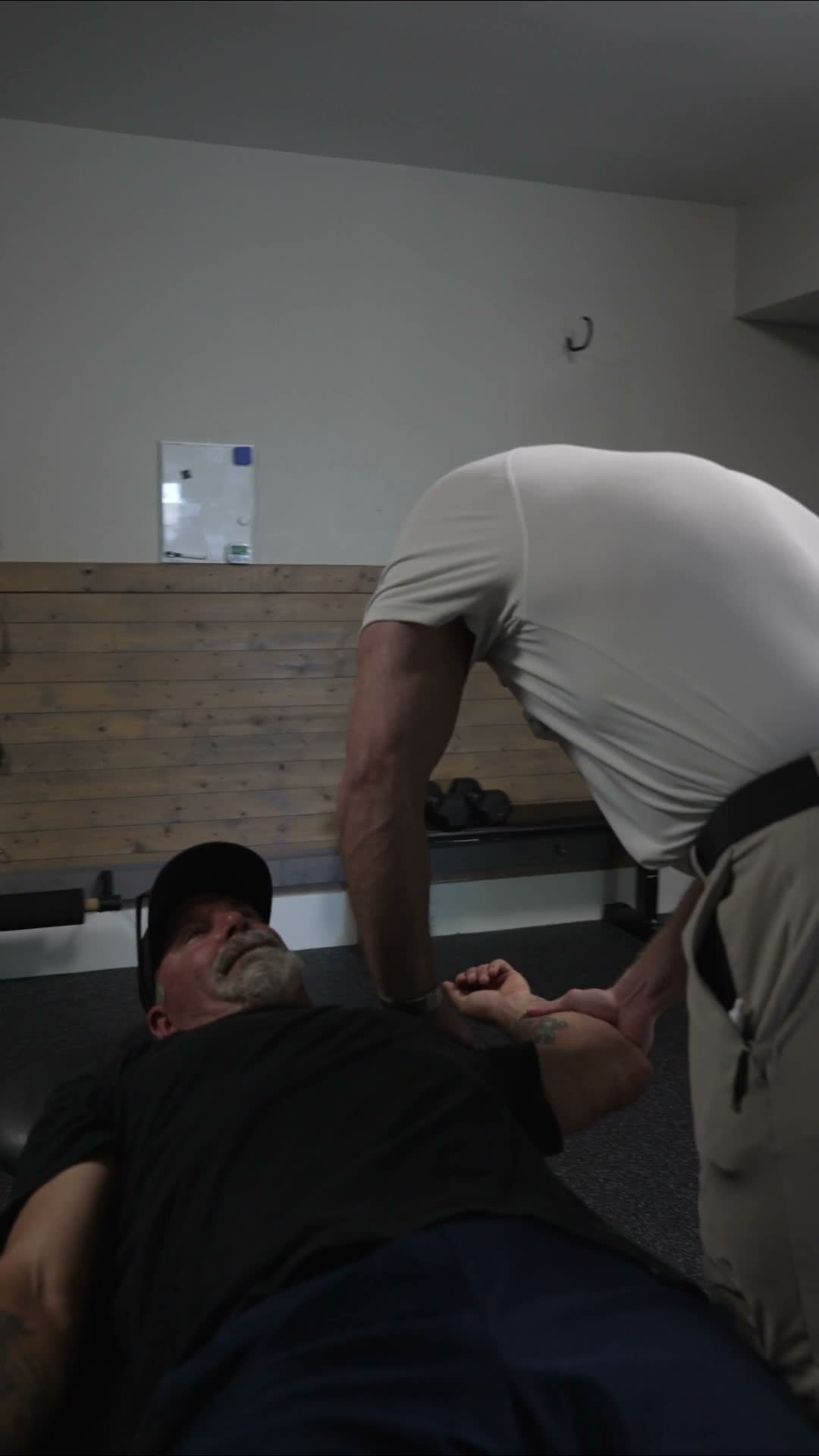
Rob has been working with Dr. Joel on his shoulder mobility for a while now, and this recent session is a good example of how that process actually works. Dr. Joel worked through Rob’s pec, his lat, and the back of his rotator cuff and delts, three areas that had been guarding since his injury.
This is manual therapy, not a chiropractic adjustment. The goal isn’t to move a joint into place. It’s to change how willing the muscle around that joint is to lengthen.
Why does a tight lat limit reaching overhead?
The latissimus dorsi, or lat, is one of the major muscles used in movements like a push-up, and it also plays a big role in raising your arm overhead. When it tightens up and guards, that overhead reach is usually the first thing to go.
This was one of the areas Dr. Joel worked through with Rob, pinning the muscle down and stretching it along its length. For Rob, that guarding had been limiting how far he could lift his arm.
Why does a tight pec limit reaching behind you?
The pectoral muscles across the front of the chest do close to the opposite job of the lat. When they tighten, reaching your arm back, like grabbing something behind the passenger seat in a car, starts to feel limited or uncomfortable.
Why does shoulder guarding limit reaching across your body?
The back of the shoulder and the rotator cuff control a different motion again: reaching across your own body, the same motion you’d use to give yourself a hug. When that tissue is tight, that cross body reach is the one that suffers.
Each of these muscles guards for a reason. After an injury, tissue tightens down to protect the area, and how much it guards usually tracks with how significant the injury was. The problem is that guarding doesn’t switch itself off once it’s no longer needed. It has to be worked back out.
Why doesn’t shoulder mobility come back on its own?
Maintaining mobility and posture is a choice, until it isn’t. As long as you keep moving through a full range, you tend to keep that range. Once you stop, for whatever reason, an injury, sitting most of the day, avoiding a movement that used to hurt, the body naturally tightens down into a more protective range, and chronic inflammation can play a role in keeping it there.
That’s part of what makes rehab like Rob’s take longer than people expect.
Why doesn’t rehab progress feel like taking antibiotics?
Because it isn’t that kind of process. Strep throat is a two day fix: take the antibiotic, symptoms clear, done. Mobility work doesn’t move in a straight line like that. It moves forward, drifts back a little, and moves forward again, and the real signal only shows up when you track it over months rather than days.
I sat a lot this weekend. And not once did I get up like a old man.
That’s Rob’s own report from this week, and it’s a good example of what progress actually looks like day to day: small, easy to miss if you’re not tracking it, but real. He also noted there’s still a little tightness left, nothing like it used to be, but not gone either. That’s an expected part of the process, not a setback.
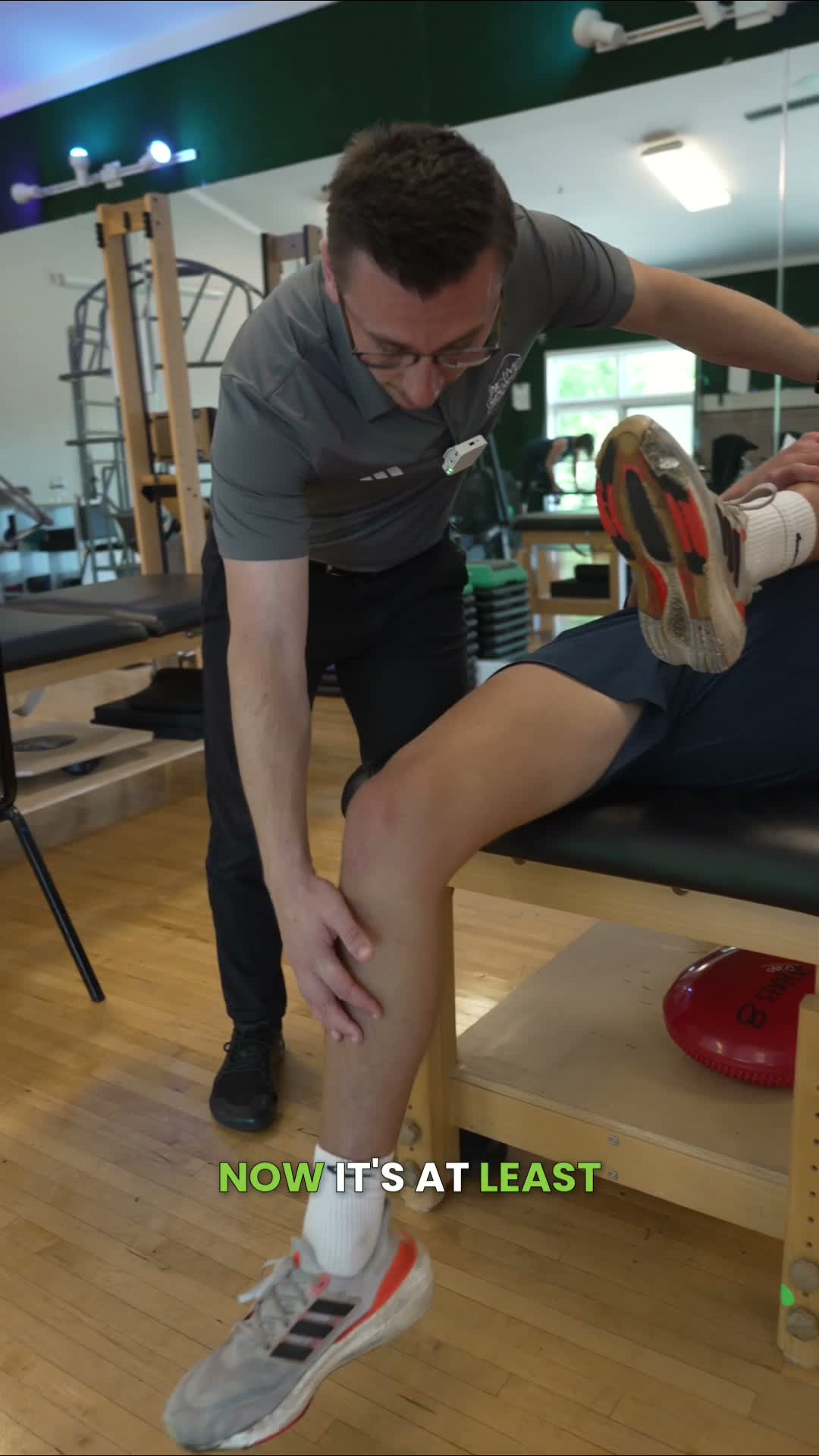
At Active Sports Therapy, we track that trend with video analysis, range of motion measurements, and strength testing at regular visits, so improvement that’s easy to miss day to day shows up clearly over time. Rob’s case, worked through with Dr. Joel in Hendersonville, is a good example of what that tracked progress looks like in practice.
Key points
- A tight or guarded muscle limits a specific motion, not movement in general.
- The lat limits overhead reach, the pec limits reaching behind you, and the back of the shoulder limits reaching across your body.
- Mobility is maintained through use. Losing it tends to happen gradually, not all at once.
- Chronic inflammation can help keep a guarded muscle guarded even after the original injury has settled.
- Rehab progress moves forward and back over time. Tracking it over months shows the real trend.
Frequently asked questions
Why does my shoulder still feel tight even though the injury is old?
Guarding can outlast the original injury. Once a muscle has tightened down to protect the area, it can stay that way out of habit even after the tissue itself has settled, especially if the joint hasn’t been taken through its full range regularly.
Can this kind of tightness happen without a specific injury?
Yes. Sitting for long periods, repetitive posture, or avoiding a motion that used to be uncomfortable can all lead to the same guarding pattern over time, even without one clear injury to point to.
How long does it usually take to notice a difference?
It varies by person and by how long the guarding has been present. Rob’s own timeline reflects his case specifically, not a general expectation, but tracking range of motion and strength over successive visits is how we see whether the direction is right.
What does progress actually look like week to week?
Often small and inconsistent day to day. A good week followed by a stiffer one is normal. What matters is the trend across months, which is why we measure it rather than judge by how any single day feels.
Sources
- Page MJ, Green S, Kramer S, et al. Manual therapy and exercise for adhesive capsulitis (frozen shoulder). Cochrane Database of Systematic Reviews. https://doi.org/10.1002/14651858.CD011275
- National Institute of Arthritis and Musculoskeletal and Skin Diseases. Rotator Cuff Problems. https://www.niams.nih.gov/health-topics/rotator-cuff-problems
If shoulder stiffness has been limiting how far you can reach, overhead, behind you, or across your body, book a new patient visit and we’ll work out which tissue is actually involved.
Active Sports Therapy · 123 Stadium Drive, Hendersonville, TN 37075 · 615-537-5520
Transcript of the video
How we do that is just assess right through here and then we’ll pin the lat down and then stretch them along watch his face. And he’s giggling. So I guess we’re in the right spot. He’s not trying to swing at me yet.
I’m always watching that left hand. You never know, but we got to dig in there pretty good. Nice and then we’ll switch and do the other arm. He was back then.
Next actually not too shabby love that. We I sat a lot this weekend. And not once did I get up like a old man dude love it. I mean I can still tell there’s a little you know, I mean but nothing like it was so of course definitely coming on like
Leave a Reply