
Reviewed October 2026 by Dr. Jason Hulme DC, DACBSP®, Dip Med Ac
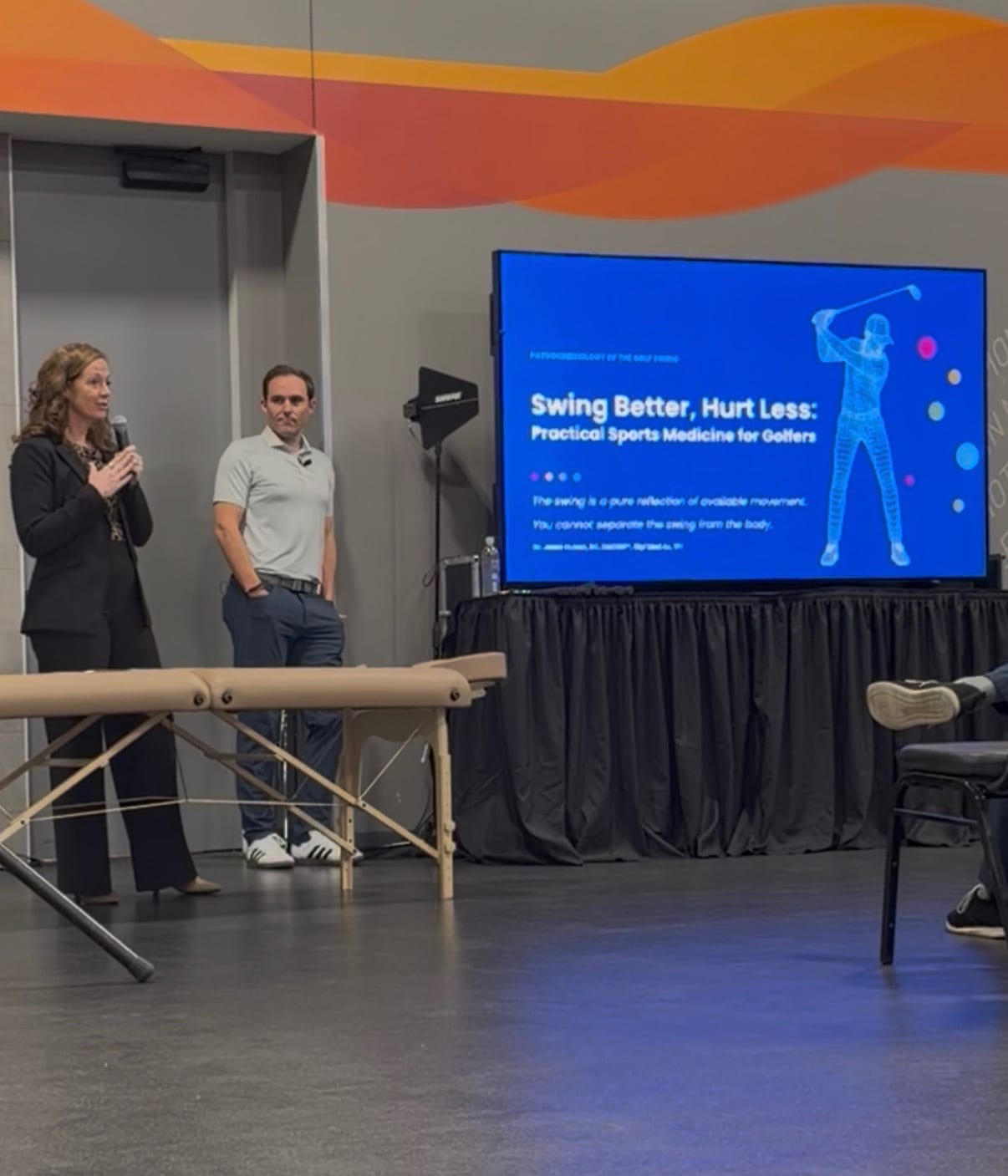
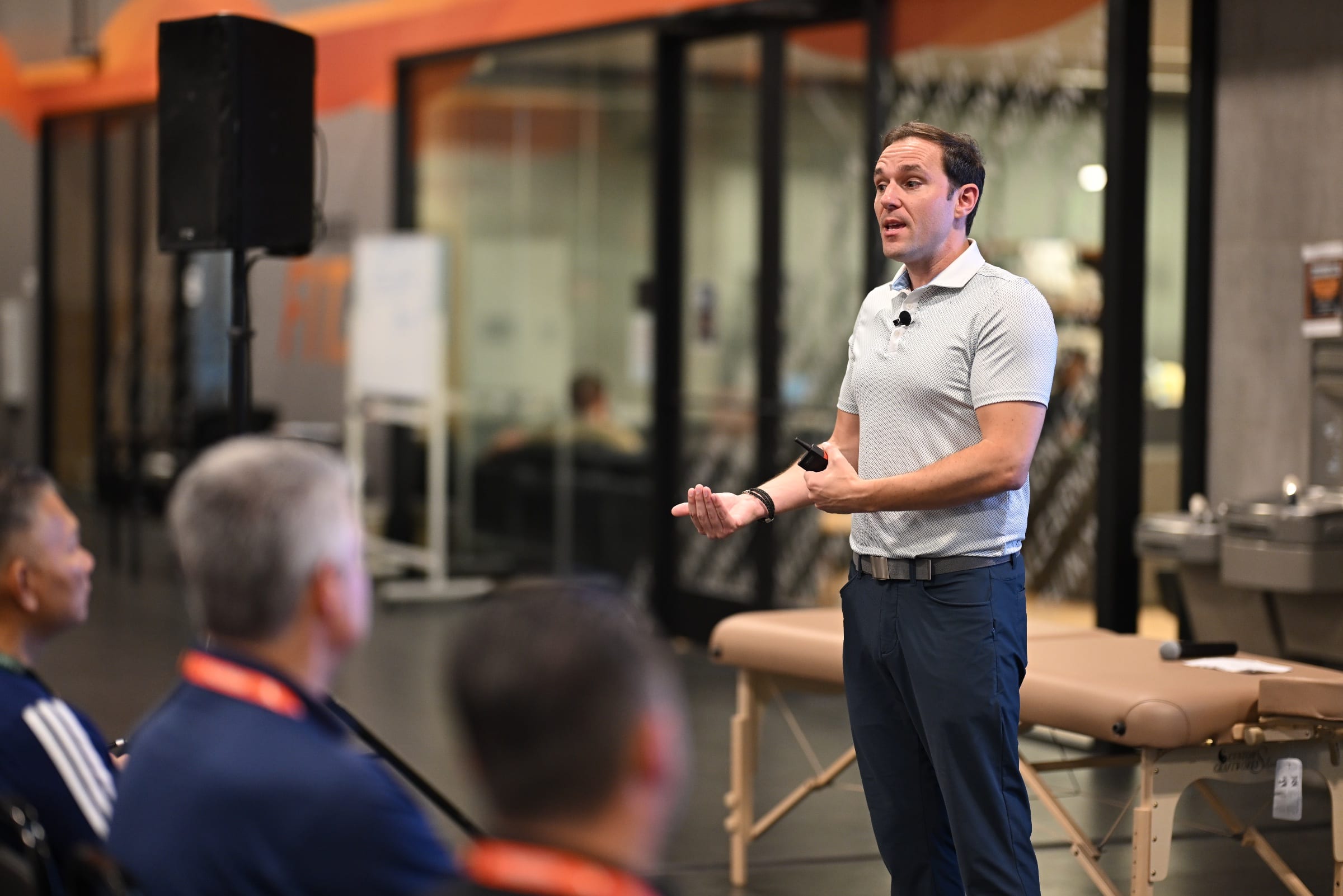
Most golfers who come in for help are not asking about their kinematic sequence. They are asking to hurt less and to play more often. That gap, between what is interesting to a clinician and what the golfer came in for, was the subject of Dr. Jason Hulme’s talk at Parker Seminars Homecoming in Dallas, 2026, titled Swing Better, Hurt Less: Modern Sports Medicine for Treating Golfers.
Photo: Title slide and intro from Dr. MaryAnne Dimak.
What was Swing Better, Hurt Less about?
It was about applying good sports medicine principles to golfers by starting with the golfer’s own goal, then choosing the warm-up, the hands-on care and the exercise from there.
The talk pulled together 18 years in sports chiropractic. In 2008 Dr. Jason took his first course through the Titleist Performance Institute, usually shortened to TPI, on the medical side of screening golfers. A golf screen is simply a set of movement tests, hips, mid-back, shoulders, ankles, that shows what the body can and cannot do before anyone talks about the swing. That course set the direction for most of what came after it.
Who is Greg Rose, and why does his work show up in how we treat golfers?
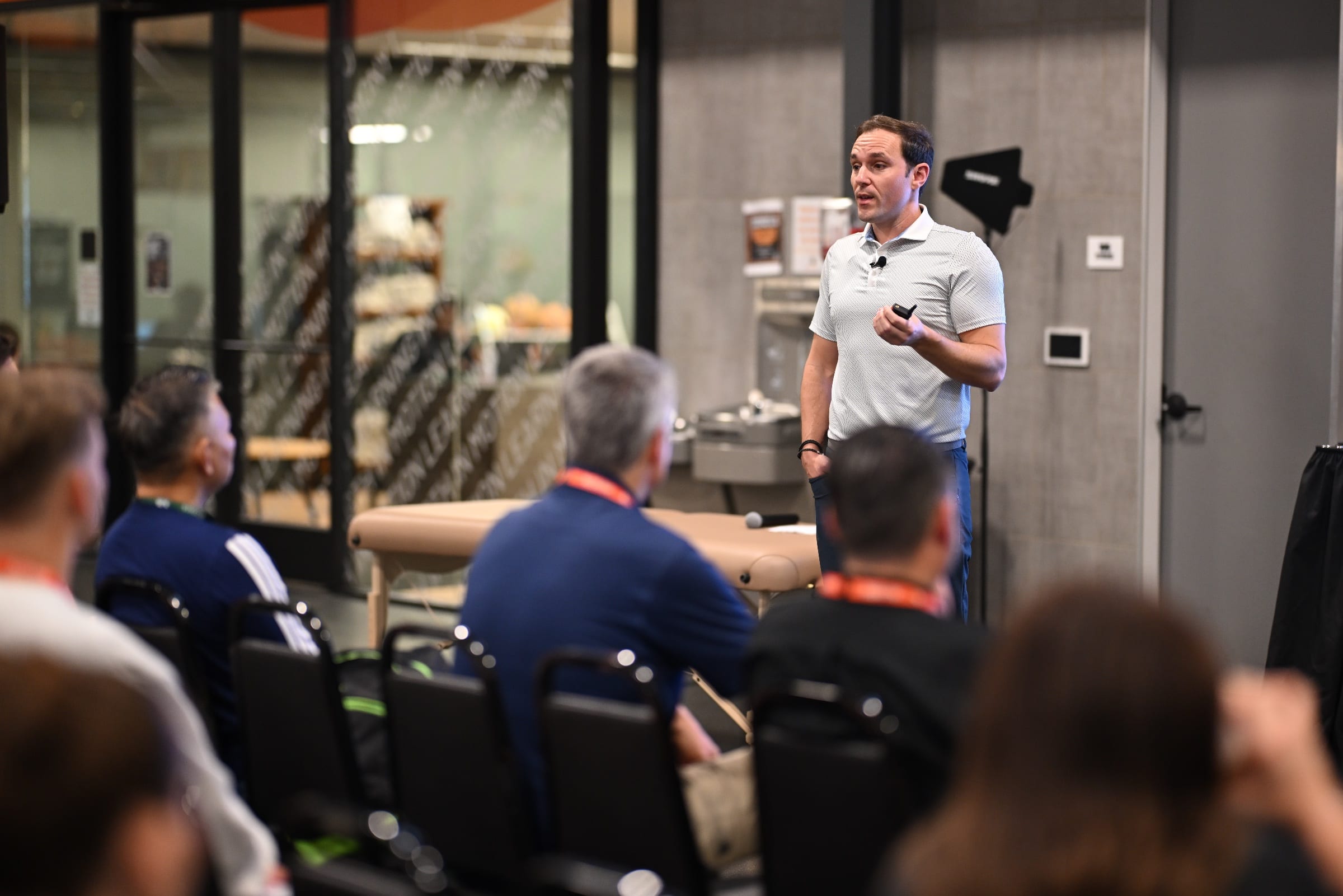
Greg Rose is a chiropractor and co-founder of TPI, and he was one of Dr. Jason’s biggest mentors from that first course onward.
He works mainly as a biomechanist and golf performance expert with professional athletes in golf, baseball and football, and he is an expert in the kinematic sequence, the order in which the hips, trunk, arms and club speed up and slow down through a swing. He was named Chiropractor of the Year 2026 by Parker University and Parker Seminars for his commitment to the profession. He was already covering the deep biomechanics in Dallas that weekend, and covering it well, so this talk deliberately took the other side of the work.
Why did handing golfers more swing detail backfire early in practice?
Because the detail answered a question they had not asked. The information was accurate. It was just aimed at the wrong target.
Early in practice Dr. Jason assumed every golfer wanted the same high level biomechanical analysis of their swing. He was providing intense detail to people who had never requested it.
They were just asking to hurt a little bit less.
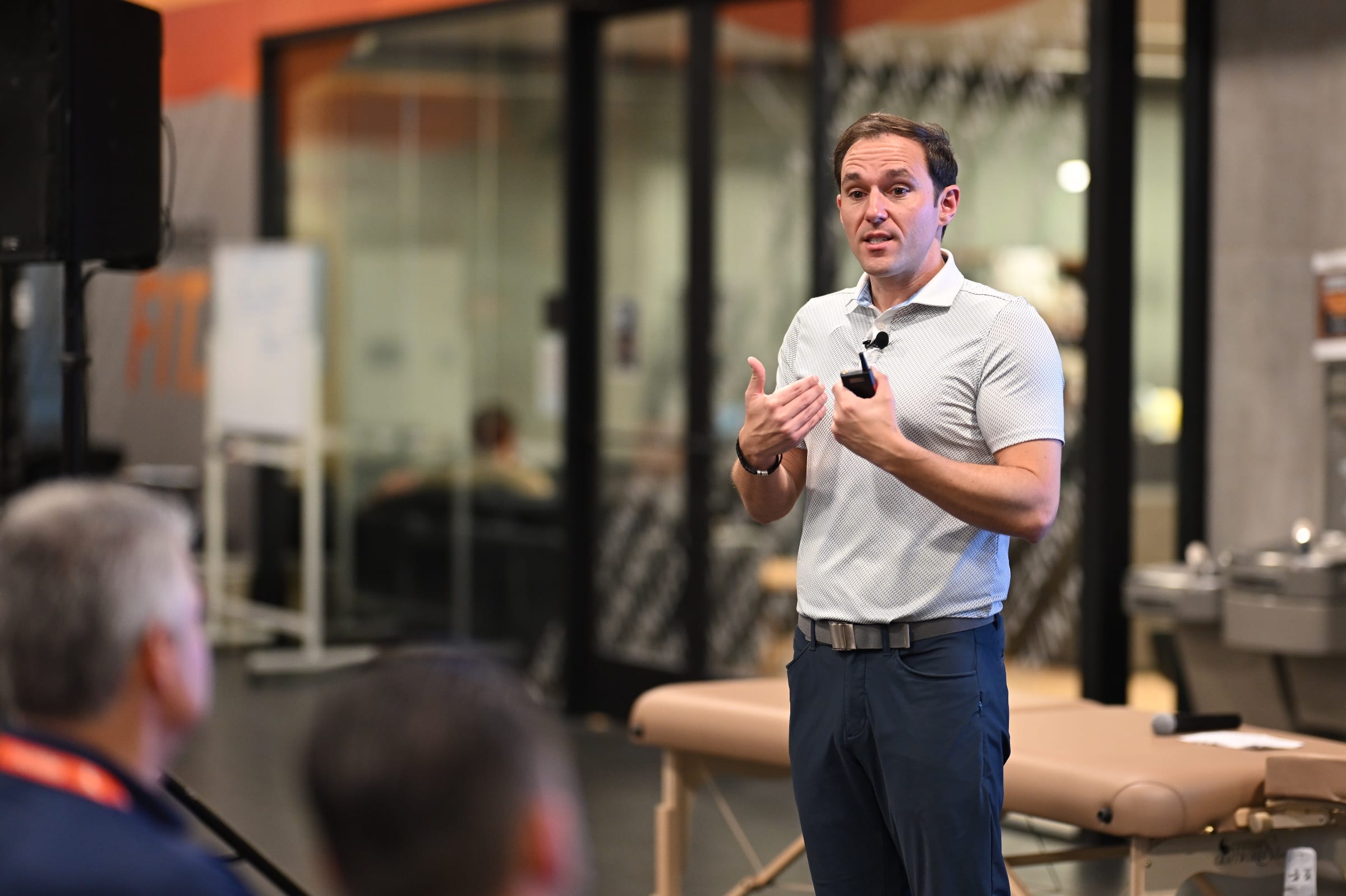
It is a little like handing someone a full engine diagnostic when they came in because the car pulls to the right on the highway. The report may be correct and still miss the reason they drove in.
What does a golfer mean when they say they want to play again?
Usually something specific, and usually not a number on a launch monitor. Asking the question out loud changes the plan.
- Exactness in the swing, and real improvement in how it is sequenced.
- Getting through a warm-up without the first three holes feeling like a negotiation.
- Picking up a kid without that same spot in the low back lighting up.
- Playing more consistently, more weekends, instead of one good round and two weeks off.
Sometimes the improvement a golfer wants is small, because family time matters more to them than ball speed does. Getting them back out there more consistently is the goal, and it is the win.
What did the talk cover for the clinicians in the room?
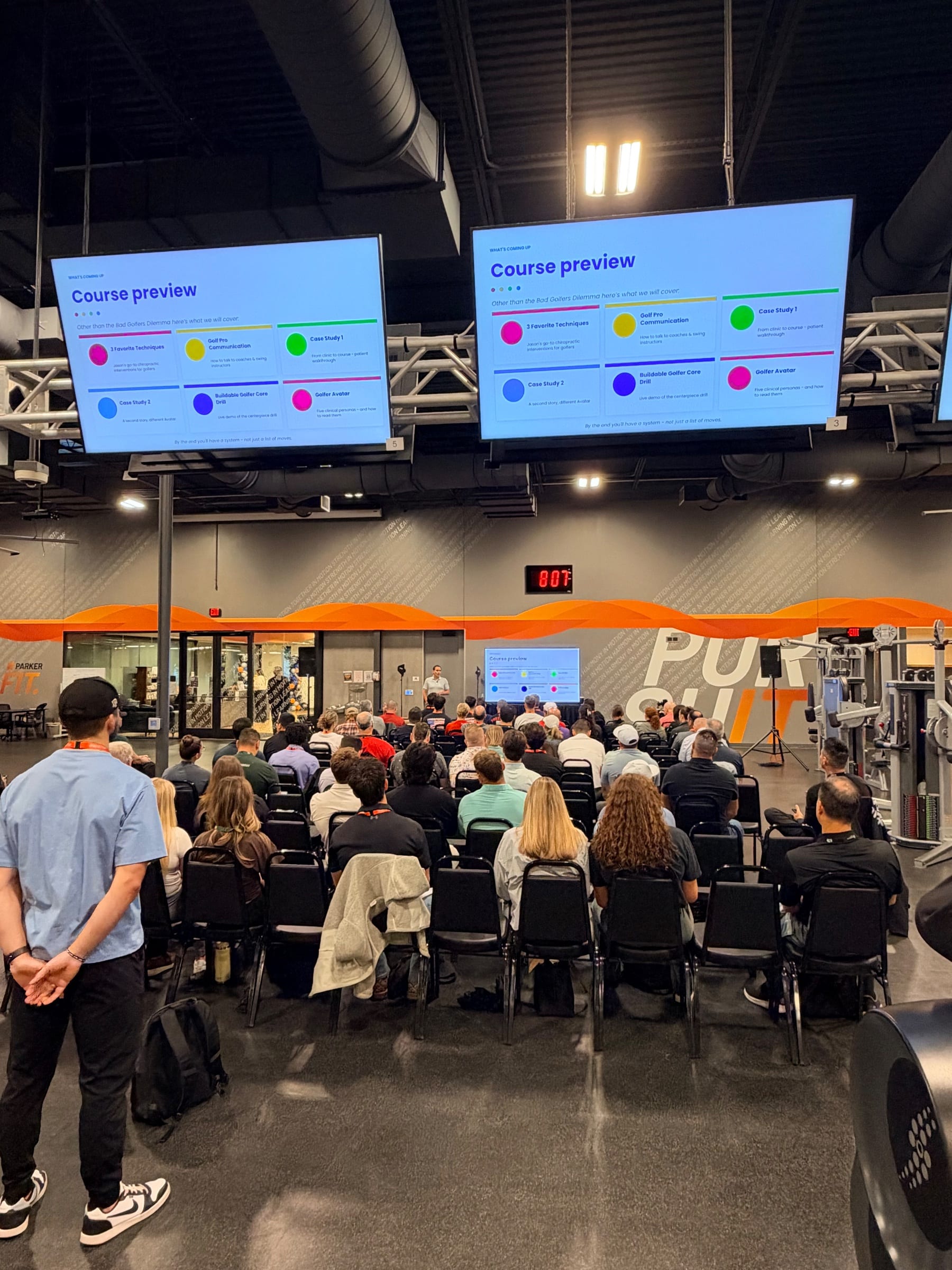
The practical half: how to classify golfers by what they want, then what to actually do with them.
- Connecting with the different types of golfers we have come to recognize over the years, and classifying patients by their goals rather than by their imaging.
- Our favorite golf warm-ups, including ones for the golfer who simply needs to get through a warm-up at all, and what the sports science says about warming up.
- Core drills we keep coming back to.
- Favorite chiropractic adjustments for golfers.
- Range of motion exercises, stretches and strengthening chosen for the individual golfer.
- Newer markerless AI devices that evaluate a swing without sensors on the body, and how they help a golfer see that the body and swing connection is real.
Photo: Full Parkerfit Room 2026 Parker Dallas Dr. Hulme.
Key points
- The talk was Swing Better, Hurt Less: Modern Sports Medicine for Treating Golfers, Parker Seminars Homecoming, Dallas 2026.
- Dr. MaryAnne Dimak gave the introduction and the room had a strong turnout.
- The clinical starting point is the golfer’s own goal, not the most interesting finding.
- Warm-ups, core drills, adjustments, mobility and strength work are selected around that goal.
- Markerless swing technology is useful mainly as a way to show a golfer how their body affects their swing.
Frequently asked questions
What is a TPI golf screen?
It is a series of movement tests looking at how the hips, mid-back, shoulders and ankles move, done through the Titleist Performance Institute framework. It is used to see where a golfer’s body is limited before anyone draws conclusions about the swing. It is an assessment, not a treatment.
Do I need a swing analysis to get help with golf pain?
Not necessarily. Many golfers come in because something hurts, and the first job is working out which tissue and which restricted motion is involved. Swing work is useful when the golfer wants it or when the body findings point straight at it.
How long should a golf warm-up be?
Long enough to raise body temperature and move the joints you are about to load. Many golfers find a short, repeatable routine they will actually do beats a longer one they skip in the parking lot.
Can I keep golfing while we work on the problem?
Often yes, and that depends on what is irritated and how it responds. Some golfers do better with a modified load for a stretch, others can keep playing while the mobility and strength work goes on alongside. It is a conversation, not a rule.
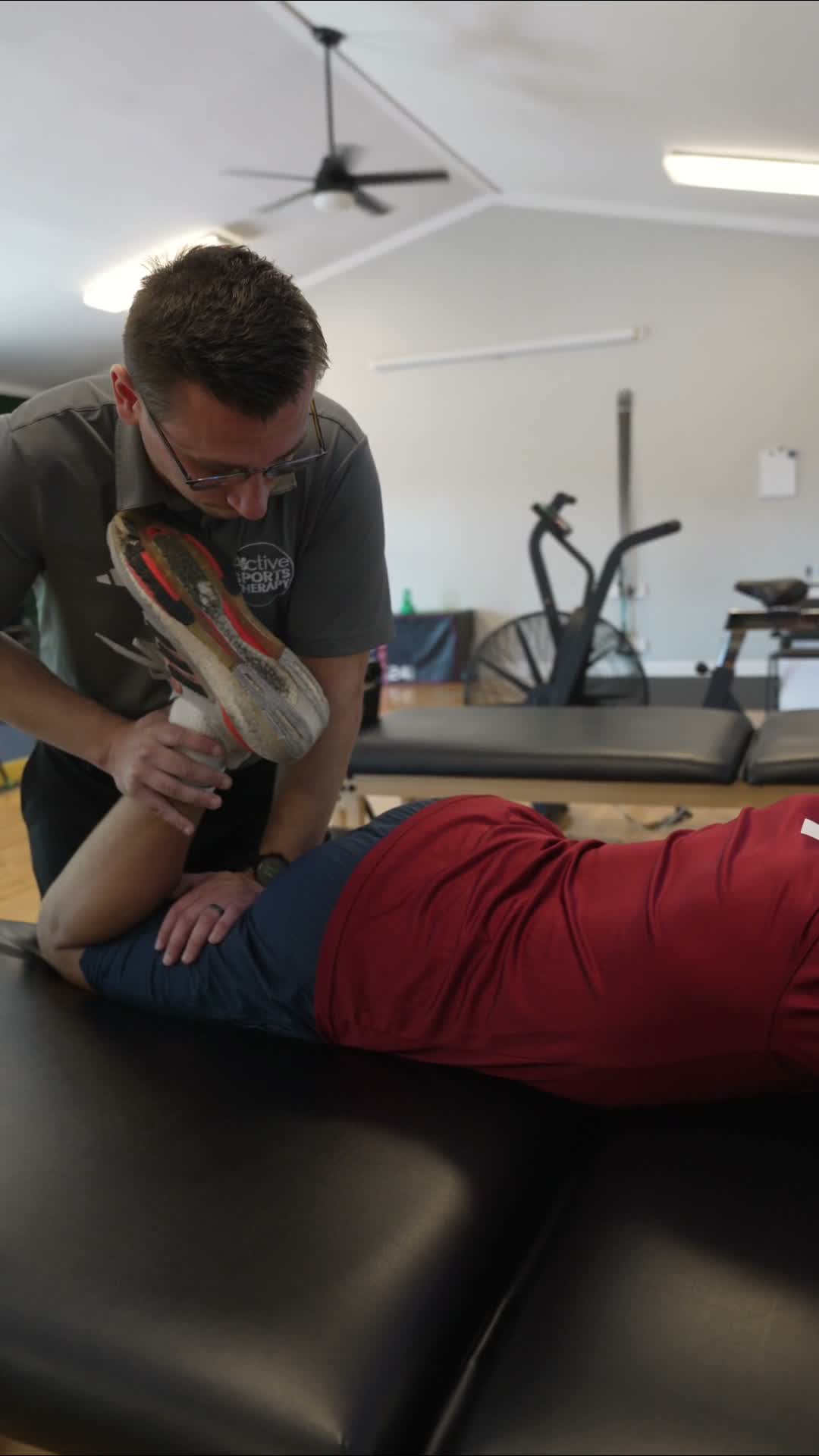
Back home in Hendersonville, the same thinking runs the golf care at Active Sports Therapy. If your back, hip or shoulder has been complaining for a few weeks after a round, book a visit and we will start by asking what you actually want to get back to, then work out what is limiting it.
Active Sports Therapy · 123 Stadium Drive, Hendersonville, TN 37075 · 615-537-5520
Sources
- Murray AD, Daines L, Archibald D, et al. The relationship between golf and health: a scoping review. British Journal of Sports Medicine, 2017. https://doi.org/10.1136/bjsports-2016-096625
- Fradkin AJ, Finch CF, Sherman CA. Improving golf performance with a warm up conditioning programme. British Journal of Sports Medicine, 2004. https://doi.org/10.1136/bjsm.2003.009399
- Titleist Performance Institute, screening and education for golf health and fitness professionals. https://www.mytpi.com
Leave a Reply