
Reviewed September 2026 by Dr. Jason Hulme DC, DACBSP®, Dip Med Ac
If the ball looks sharp only after you have already started to move, or if near work goes soft after twenty minutes, the issue is often focusing speed rather than eyesight. Dr. Dan Kelly of Kelly Vision demonstrated a tool for that at our 2026 conference: a flipper lens, which forces the eyes to reset their focus over and over. He described it as a warm-up for the brain, not a test of how well you see.
What is a flipper lens actually doing?
It changes the demand on your focusing system every few seconds and asks you to clear the image again. Nothing about the target moves. Only the work your eyes have to do changes.
Accommodation is the word for the focusing adjustment your eyes make when something moves nearer or further away. A flipper is a paddle holding two pairs of lenses of different power. Flip it, and the target that was clear a second ago is not, and your system has to solve it again. Dr. Kelly compared the paddle to a masquerade ball mask: it sits at the bridge of the nose, and the head stays still.
We also look at flipper flexibility. This is how we like work out your cognitive muscle.
Why would a goaltender warm up his eyes before a game?
Because the first save of the night should not be the first time the visual system is asked to work at speed. That was Dr. Kelly’s reasoning, and he said Predators goaltenders use flippers before games for exactly that. [verify: the team named and the specific pregame use described in the clip]
It is the same logic as any warm-up. You would not walk from the parking lot onto the ice. He described the drill as getting the brain ready for the puck, so the tracking and the clearing are already sharp when it matters.
How did he run the drill in the room?
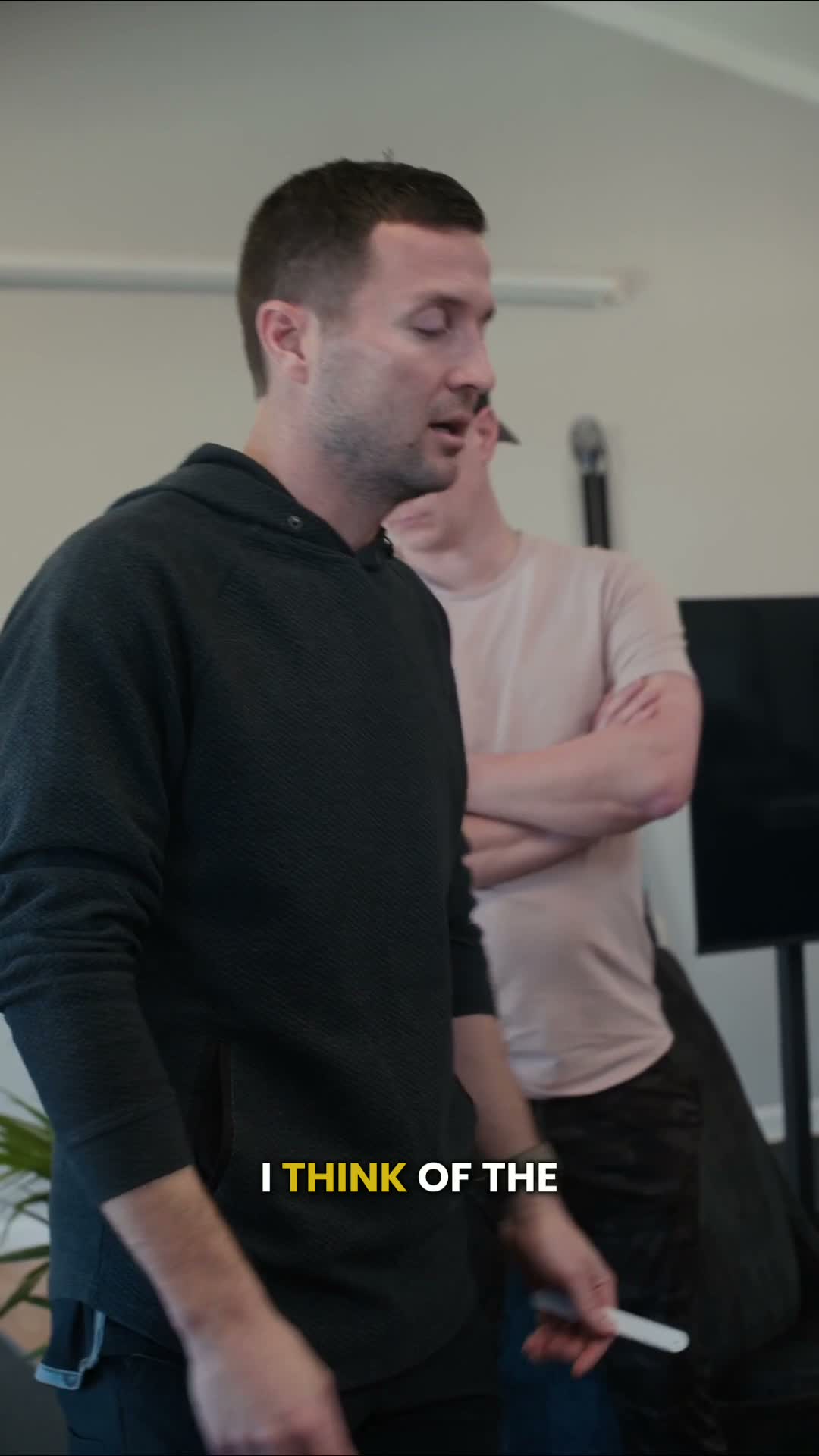
He handed them around and talked people through it while they worked. It is short, and it is harder than it looks.
- Hold the flipper at the bridge of the nose, head still.
- Look at your target and make it single and clear.
- Flip to the other lens power without moving your head.
- Clear it again, then bring the target in closer and repeat.
He also pointed out that the same lenses can simulate farsightedness and nearsightedness, which is why they are useful for showing a room what somebody else’s visual world feels like.
What does eye alignment have to do with where the ball goes?
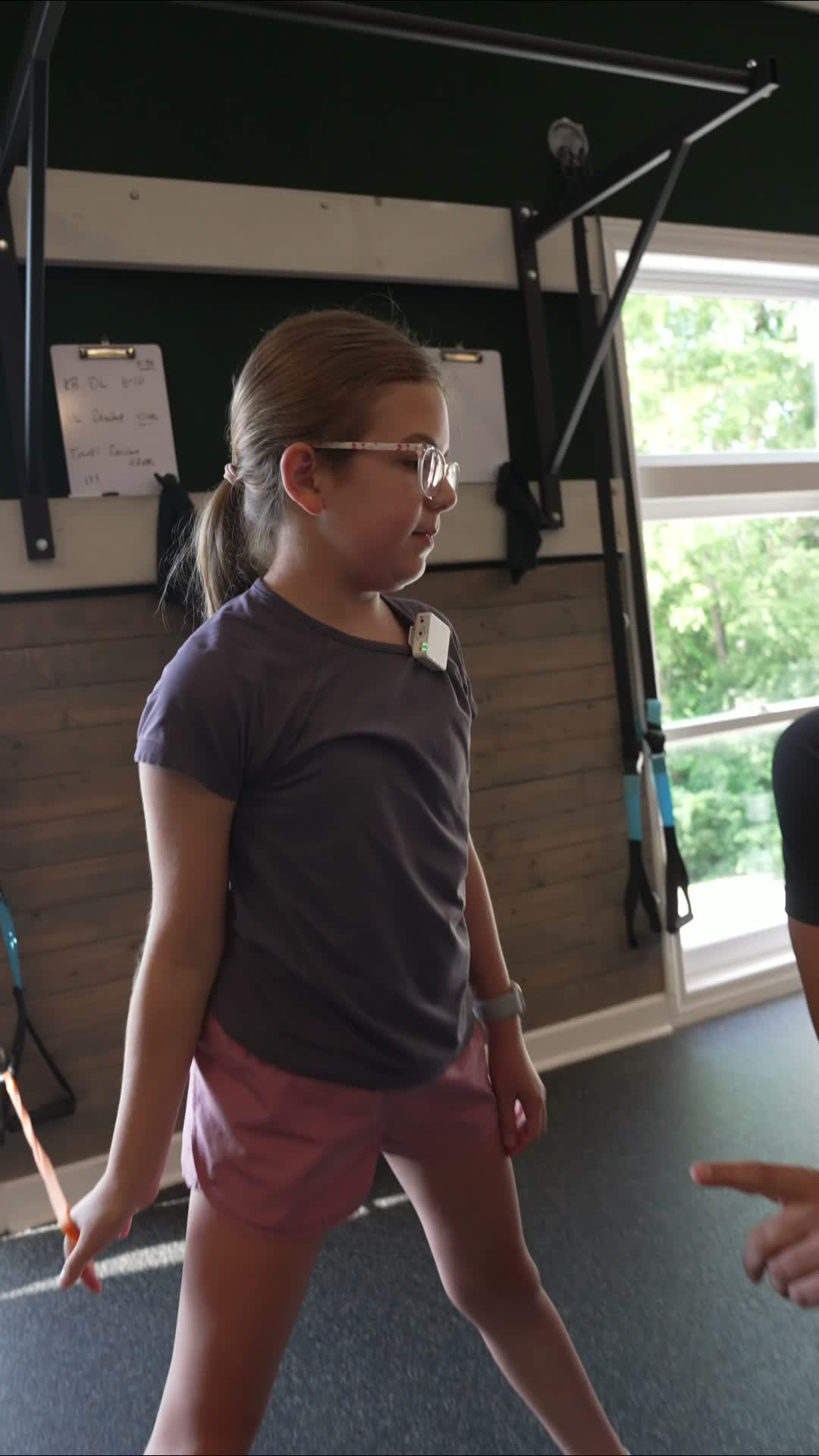
Focus is only half of it. The other half is where your two eyes rest relative to each other, and Dr. Kelly checked that on our office manager, Mallory, in front of the room by covering one eye and watching where it drifted.
His argument was that the resting posture has a behavioral signature. Someone whose eyes sit turned out, what he called exo, tends to be open and expansive, writes big, and on the course may read a putt long and blast it through the break, or on the court catch the backboard. Someone on the other side of it presses forward and works in closer to the target. He compared the whole check to what we already do in a body assessment. Dr. Greg Rose of the Titleist Performance Institute, one of Dr. Jason’s mentors, runs alignment checks with the golfers he coaches. [verify: the direction of aiming error attached to each posture, as the audio is partly unclear]
When is this worth getting looked at?
When symptoms are showing up, not when you are chasing a percentage point of performance. Blur at near, strain by the afternoon, headaches with screen work, or vision that has not been the same since a head injury are all reasons to be seen by an eye care provider.
Active Sports Therapy does not test eyes or run vision therapy. We work with the symptomatic end of it that already comes through our door in Hendersonville: headaches, migraines, ocular migraines and the neck component underneath them. We also do a quick vision screening in the office when it has been a long time since the last one, and we say plainly when somebody should be in front of a specialist like Dr. Kelly.
Key points
- A flipper lens changes focusing demand on purpose so the eyes have to clear the image again.
- Dr. Kelly framed it as warming up the cognitive side of focus, not as an eyesight test.
- He attributed pregame flipper use to goaltenders getting ready for puck speed.
- Resting eye posture is a separate measurement and may show up in setup and aiming.
- Our part is headaches, ocular migraines, the neck, a quick screening and a referral when warranted.
Frequently asked questions
Is flipper training the same as vision therapy?
It is one tool that can appear within vision therapy, but it is not the whole thing. A full program is built after an assessment by an eye care provider, based on what that person’s system is actually doing.
Can I buy flippers and use them on my own?
Ask an eye care provider first. The power of the lenses and the working distance matter, and the drill should follow an assessment rather than replace one.
Why do my eyes feel tired at the end of a workday?
Hours of near work ask the focusing and alignment systems to hold a close target continuously, and many people notice blur, strain or headache when that is effortful. Neck and upper back tension from the same desk position often shows up alongside it.
Should I get my vision checked after a concussion?
Vision complaints are common after a head injury, and eye movement and focusing problems are frequently found on examination. If symptoms have persisted, an eye care provider experienced with post-concussion cases is the right person to see.
If headaches, ocular migraines or neck tension have been part of your week, book a new patient visit and we will assess the neck and the symptom pattern, then tell you honestly whether a full vision assessment belongs in the plan.
Active Sports Therapy · 123 Stadium Drive, Hendersonville, TN 37075 · 615-537-5520
Sources
- Appelbaum LG, Erickson G. Sports vision training: a review of the state-of-the-art in digital training techniques. International Review of Sport and Exercise Psychology. 2018;11(1):160-189. https://doi.org/10.1080/1750984X.2016.1266376
- Convergence Insufficiency Treatment Trial Study Group. Randomized clinical trial of treatments for symptomatic convergence insufficiency in children. Archives of Ophthalmology. 2008;126(10):1336-1349. https://doi.org/10.1001/archopht.126.10.1336
- Master CL, Scheiman M, Gallaway M, et al. Vision diagnoses are common after concussion in adolescents. Clinical Pediatrics. 2016;55(3):260-267. https://doi.org/10.1177/0009922815594367
- American Optometric Association. Comprehensive eye exams. https://www.aoa.org/healthy-eyes/caring-for-your-eyes/eye-exams
Transcript of the video
They focus on it, but now she’s jumping so it’s turned right guys. So she’s gonna when I cover her left eye. It’s gonna go to its happy place and that happy place could still be at the Target but I’m gonna wake it up. I’m gonna jump over you see how it swung in swings in swings in so she’s somebody that if we’re doing up close stuff we’re talking about like putting or a golfer getting to dress she might move further away from the ball because she feels like you know, the world is a little bit further front or like tighter to her.
So she’s like moving back. if we’re putting I like to putting analogies in basketball for putting she’s someone that if it’s still a posture that Is EXO Fork eyes turned out? She might overshoot the the line like she’s gonna blast it through the break. For Hoops, you might hit the backboard air ballot on the backside.
So I alignment this is the guy that’s Dr. Rose a Titleist TPI Institute. He does these with a he’ll do alignment checks with them and just see does this person fit this type of eye issue just like what you all do in body assessment, you know, like I think of the visual system as if I have eyes at 10:01 across I’m going to kind of like press forward. I’m going to search for this world.
I’m trying to get my alignment closer to the Target if I’m EXO eyes turned out I tend to be like Duck posture really happy with the world. I even write really big. I might be really loud and nobody’s a stranger. We also look at flipper flexibility.
This is how we like work out your cognitive muscle. So these are flipper lenses what they are y’all can play with them, but you can also simulate like farsightedness and your side and with this but yeah, you want to be able to like to just so yeah our prayer Our creds players use these before games the goal tenders especially so your nose will go here. It’s like a masquerade ball masks. And you’re going to try to make it clear and then flip it watch your head.
Yeah, and then bring it closer to just warm their brain up to be ready for the yeah the puc just look at it. Yep. Make it one. Oh make it one.
Yeah, can you make it one is still closed flip it still. Flip it. Can you make that one one? This is usually easier.
No.
Leave a Reply