Most people expect a concussion to clear in a couple of weeks. When it does not, the frustrating part is that no single thing seems to explain it. The headaches come back in a bright store. The dizziness shows up with quick head turns. Running feels fine until the heart rate climbs, and then it does not. That is the pattern we see with persistent symptoms, and it is why we do not treat post-concussion cases as one problem with one fix.
Persistent symptoms are rarely one problem
With Caroline, a passionate soccer player who came to us after a concussion with significant post-concussion syndrome, the work spread across a long list: the visual component, the dizziness component, the inner ear component, the oscillation component of change of position up and down, balance, coordination, regaining strength, the ability to tolerate heart rate coming back up, light sensitivity and hearing sensitivity.
We so often see that these get missed in cases with persistent symptoms. Somebody feels reasonable sitting in a quiet exam room, gets sent back to a sport that asks for all of those systems at once, and the symptoms return. Our view is that there is no stone that can be left unturned.
Vision, inner ear and the oscillation piece
Vision and the inner ear do a lot of quiet work together. When you turn your head, your eyes have to stay on target. When you drop into a squat or come back up, your system has to know where you are in space. That up and down change of position, the oscillation piece, is one that often gets skipped in a rehab plan, and it is frequently the one that reproduces symptoms.
Sorting out which of those systems is contributing is a large part of the exam. It is also why we do not simply tell people to rest until they feel better. Rest has its place early on. After that, the systems usually need to be loaded, in doses the person can handle.
Heart rate, light and sound: the tolerances that come back last
Tolerance is its own category. A person can pass every balance and eye movement screen and still get symptomatic the moment their heart rate climbs, or when they walk into a gym with bright lights and a whistle. Building that tolerance back is a deliberate part of the plan, not something that happens by accident.
How fast any of it comes back varies from person to person, and we hedge on that on purpose. Caroline’s progress is Caroline’s. The list of things to address is what we can generalize; the timeline is not.
What a random reaction drill shows us that a straight-line run cannot
Think of it like driving. A road you have driven a thousand times takes almost nothing from you. A new city at rush hour, same car and same speed, takes everything. The difference is not the driving, it is the reading.
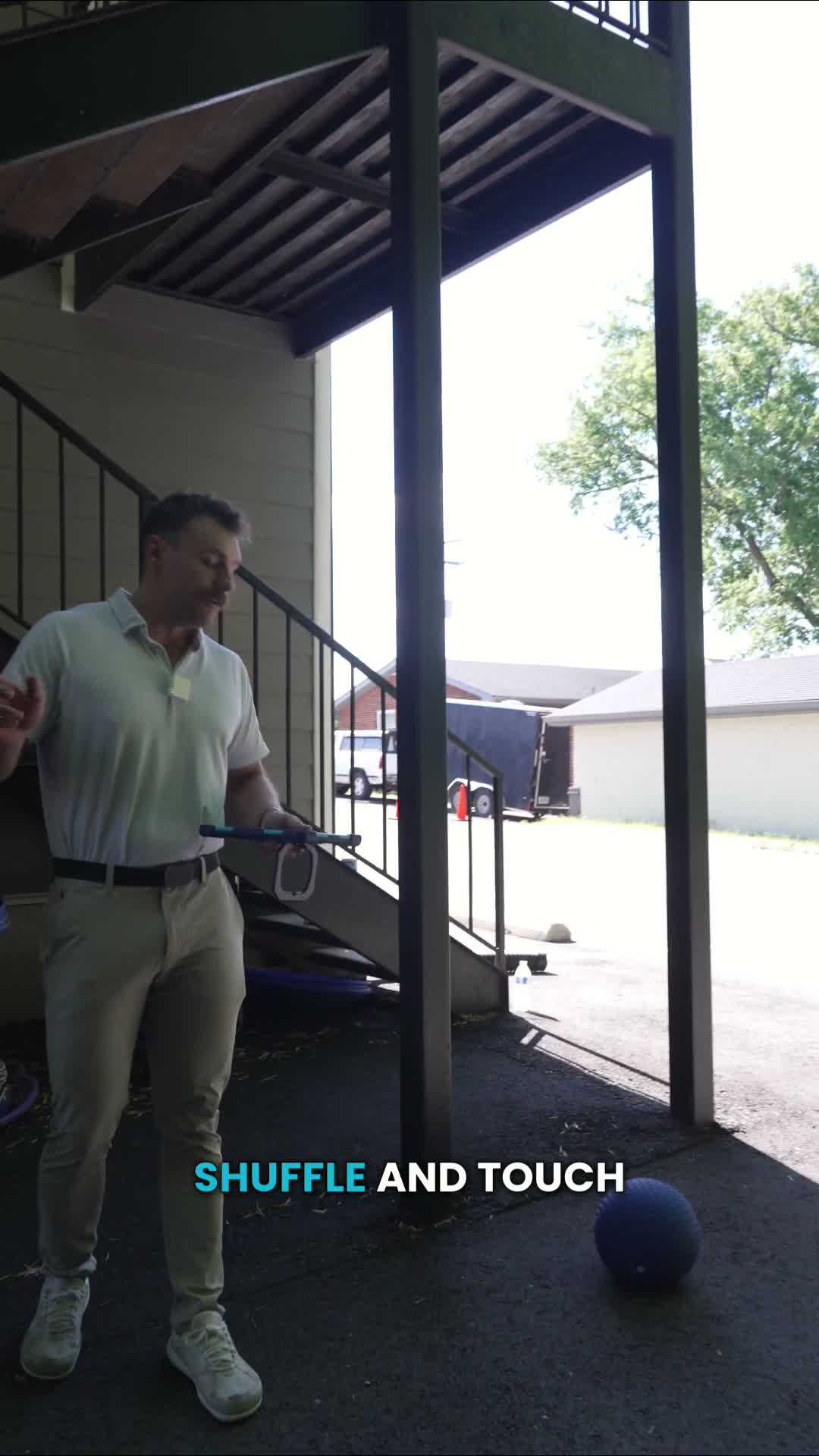
That is the difference between a cone pattern an athlete has memorized and the drill in this clip. As we say in the video, “that’s a total random pattern where she can’t predict where it’s going, so she’s got to use all of her senses.” Caroline is side shuffling between BlazePods, watching for which color lights up, cutting to it, touching it, then moving again while maintaining her form the whole time.
Dr. Joel prescribed this one in part because it stacks demands. With resistance added, we get good resisted hip abduction work through every lateral step, while she performs the quick visual assessment of where to go next from the randomized order of the lights. Strength and visual processing in the same rep. The equipment also lets her compete against herself and try to get better every single time, which matters for a young athlete who has spent months being told what she cannot do yet.
Why we start with the SCAT6
The SCAT6 is the Sport Concussion Assessment Tool, sixth edition, the standardized assessment that came out of the international consensus statement on concussion in sport. It is a structured checklist rather than a single test, walking through symptoms, orientation, memory, concentration, neurological screening and balance.
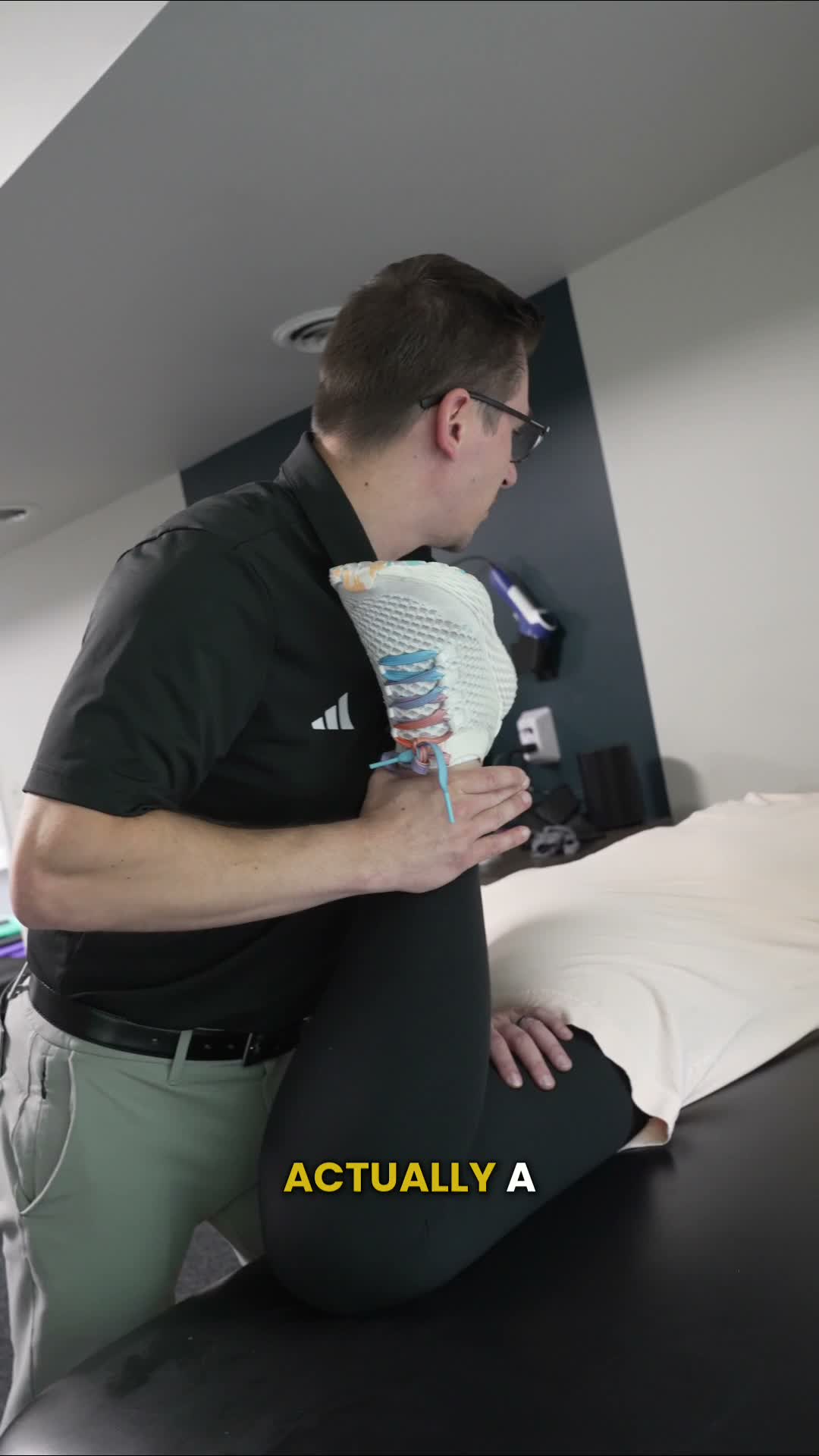
We use it because a structured exam covers the same ground every time and does not assume. A thorough evaluation and a thorough exam are what keep something obvious from being missed in a case that has already dragged on. From there, we build our own progressions of exercise and treatment in the order the person can tolerate them.
FAQ: symptoms that will not settle
Why does a busy grocery store feel worse than a quiet room?
Bright, crowded, moving environments ask the visual and inner ear systems to work hard at the same time. When those systems are still sensitive, that combination is often what brings symptoms on, even when sitting quietly feels fine.
Why do I feel dizzy when I stand up or squat down?
Change of position up and down is its own demand on the inner ear and visual systems. Many people find it is the piece that was never specifically retrained, which is why it keeps showing up.
Is it safe to exercise if my symptoms come back with exertion?
Building tolerance for a rising heart rate is usually part of rehab, but it should be done in graded doses with somebody monitoring how you respond. That is a conversation to have during an exam, not a decision to guess at alone.
How do you decide when an athlete is ready for cutting drills?
We look at how the vision, balance, coordination and strength pieces are performing, and whether the person can tolerate the heart rate and the environment. Cutting and reacting come once those foundations hold up.
If this sounds like your athlete
If symptoms have lasted longer than expected after a hit to the head, or your athlete keeps stalling out on the way back to their sport, that is worth a thorough exam here in Hendersonville rather than more waiting. Book a visit with us and we will work through the list one system at a time. We love cheering on athletes like Caroline, and that starts with finding out what is actually still bothering them.
Transcript of the video
That’s why we love this drill because it’s a total random pattern where she can’t predict where it’s going. So she’s got to use all of her senses. One of our favorite things to do with this. She’s at the point right now where she can have a random change in Direction.
So we like to use our Blaze pods and it’s very good for a soccer related activity because she’s going to be side shuffling and she has to look and see which color is lighting up while she’s doing it and then I’m gonna hit go on the blaze pods and Caroline’s gonna lateral shuffle and touch each Place pod that comes up with the color and the beautiful thing about this piece of equipment is she can compete against herself and try to get better every single time. But that’s why we love this drill because that’s a total random pattern where she can’t predict where it’s going. So she’s got to use all of her senses. She’s got a cut fast and then keep moving through it and maintainer form the whole time and she’s absolutely crushing itself in time.
Awesome.