
If your ankle puffs up every time you train, the swelling is not just something to look at. It is the thing limiting you. Fluid in and around a joint reduces available range of motion and makes the surrounding muscles slower to fire, so the amount of useful work you can do that day drops with it. That is why swelling gets handled before the loading, and why cold goes on at the end rather than instead of the hard work.
What does swelling do to a joint besides look bad?
It takes up room, and it turns the muscles down. A joint with fluid in it has less space to move through, and the muscles that cross it tend to contract less strongly, which is a normal protective reflex.
Picture a door with a rolled towel stuffed in the jamb. The hinge is in perfect condition. The door still will not close, and leaning on it harder only annoys the frame. A swollen ankle behaves the same way. The joint surfaces may be doing fine, but the fluid decides how far it travels and how much it will tolerate.
Why did a massively swollen leg get almost no treatment that day?
Because there was nowhere for the work to go. Nico, a basketball coach working back from a lower leg injury that ended a professional season, came in on a Friday with the leg massively swollen.
It was massively swollen and we barely did hardly anything and it was there was just so much swelling.
Once the swelling came down, he said it stayed down through the weekend, and it was still quiet on Saturday night when we spent a little time in the golf sim. That was his weekend, on his timeline, and we leave it as his. What it shows is the principle: get the fluid out of the way and the rest of the week becomes usable.
Should cold go at the start of a session or the end?
At the end, in almost every case we run. Cooling a joint before you load it dulls the feedback you need in order to judge the load.
| Cold at the start | Cold at the end |
|---|---|
| Numbs the joint before you ask anything of it | Calms the joint after it has already done the work |
| Hides the feedback that tells you how much load is right | Leaves feedback intact during the loading |
| Tissue is cooler and less compliant going into movement | Movement happens warm, relief comes afterward |
| Can feel good, changes little | Often lets somebody leave with a little relief |
Does the cold remove the swelling by itself?
Not on its own. Cooling narrows local blood flow for a while and quiets the nerve endings that report pain. Clearing fluid is mostly a pumping job, done by movement and muscle action, which is why the ankle keeps rotating the whole time the cold is being applied.
Surface temperature gets checked during the application, 51 to 53 degrees in one reading, with the aim of getting lower. That is a skin reading rather than a measure of what is happening deep inside the joint, so it is a rough guide to whether the application is doing anything, not a number to chase for its own sake.
How does this change a session for an athlete?
It changes the order, not the ambition. Nico needs to hop, dunk, have full use of his lower leg, be involved in practices with his players and get out and golf. Those demands require real loading, including plyometric work, which means landing.
- Check how swollen the leg is and what range is actually available.
- Hands on and joint work to use the range there is.
- Load it: strength first, then the jumping and landing work the sport asks for.
- Cold at the end, with the joint moving, roughly forty seconds.
- Leave with a little relief, so the next day is usable too.
Key points
- Swelling limits range of motion and dampens the muscles around the joint.
- Loading a badly swollen joint usually adds irritation, not progress.
- Cold narrows blood flow and quiets pain, movement does most of the fluid clearing.
- Cold belongs at the end of the session, after the work that drives change.
- One person’s swelling free weekend is their own result, not a forecast for anyone else.
Frequently asked questions
Why does my ankle swell hours after I train rather than during?
Fluid accumulates gradually in response to the irritation, so the puffiness often shows up later that evening or the next morning. A consistent pattern like that usually means the dose of work was higher than the joint was ready for.
Is it bad to keep training while the joint is swollen?
You can usually train around it, but pushing the swollen joint itself tends to keep the cycle going. Getting the swelling down first is what makes the loading productive.
How cold does the skin need to get to matter?
Skin surface readings give a rough sense of whether the tissue is cooling, and in Nico’s session the reading sat in the low fifties with the goal of getting lower. It is a guide during the application, not a target you should chase at home.
Does compression help more than cold?
Compression and movement both help move fluid, and in practice they are used together rather than chosen between. Which combination suits your joint depends on what is irritated and how recent the injury is.
If your ankle has been swelling after every session, or you are rebuilding a leg after a fracture and cannot tell how much is too much, book a visit at our Hendersonville clinic and we will measure what the joint will take and build the week around it. Our doctors spend most of their time on sports injuries, and the plan is written against what you need the leg to do.
Active Sports Therapy · 123 Stadium Drive, Hendersonville, TN 37075 · 615-537-5520
Sources
- Bleakley C, McDonough S, MacAuley D. The use of ice in the treatment of acute soft-tissue injury: a systematic review of randomized controlled trials. Am J Sports Med. 2004;32(1):251-261. https://doi.org/10.1177/0363546503260757
- Dubois B, Esculier JF. Soft-tissue injuries simply need PEACE and LOVE. Br J Sports Med. 2020;54(2):72-73. https://doi.org/10.1136/bjsports-2019-101253
- Rice DA, McNair PJ. Quadriceps arthrogenic muscle inhibition: neural mechanisms and treatment perspectives. Semin Arthritis Rheum. 2010;40(3):250-266. https://doi.org/10.1016/j.semarthrit.2009.10.001
Transcript of the video
We’re going to deep blue cryo. Keep that swelling off of it on Friday when he came in. It was massively swollen and we barely did hardly anything and it was there was just so much swelling. We knocked on the swelling and it was good all weekend.
I didn’t we saw him Saturday night. We were playing in the golf sim a little bit. He had no swelling still stayed maintained. That’s what we’re looking for.
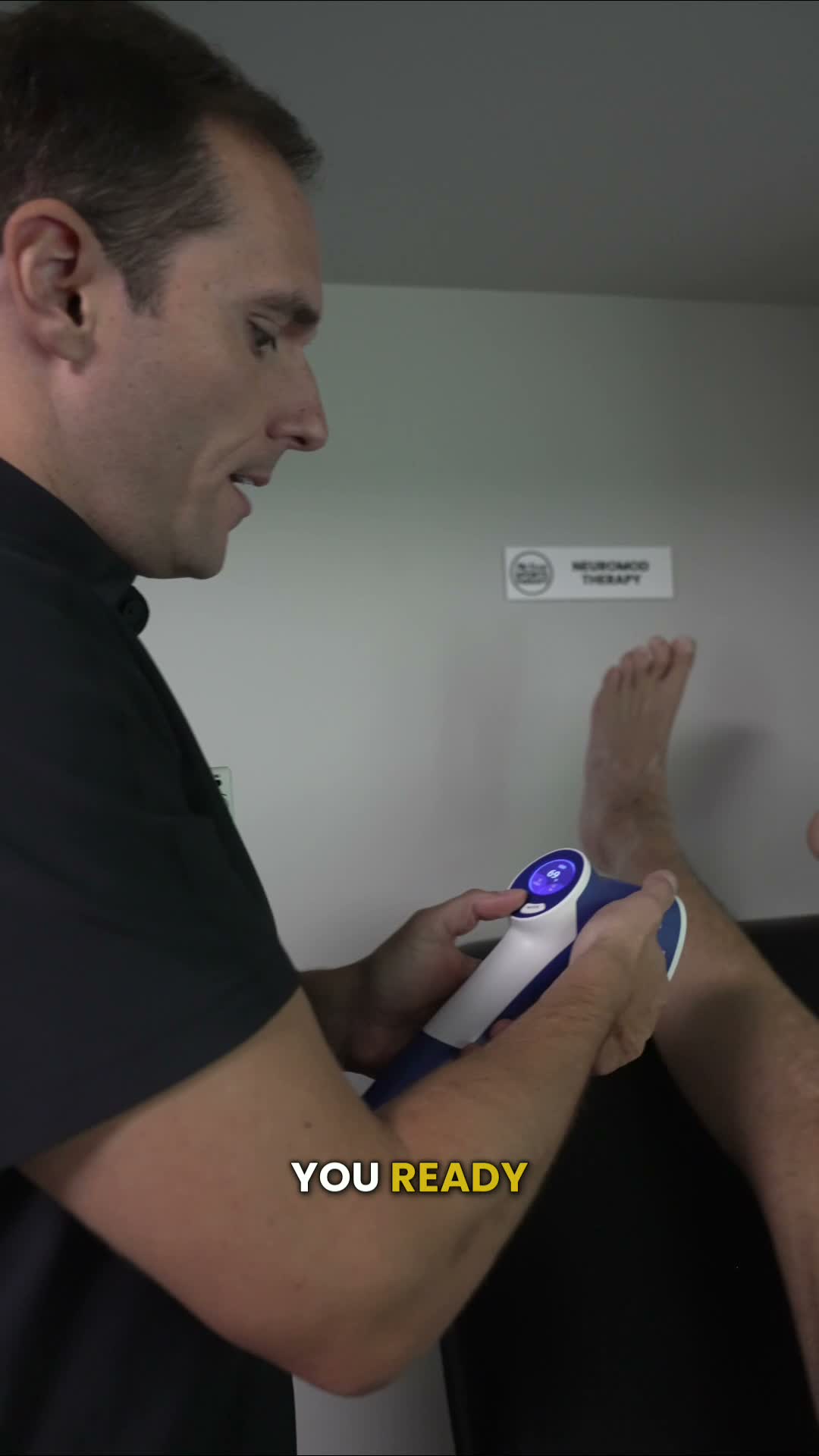
It’s still a little bit more irritated, but we really want to hit that really quick. So it’s feeling really good going into tomorrow session. So we’re gonna go here. You ready?
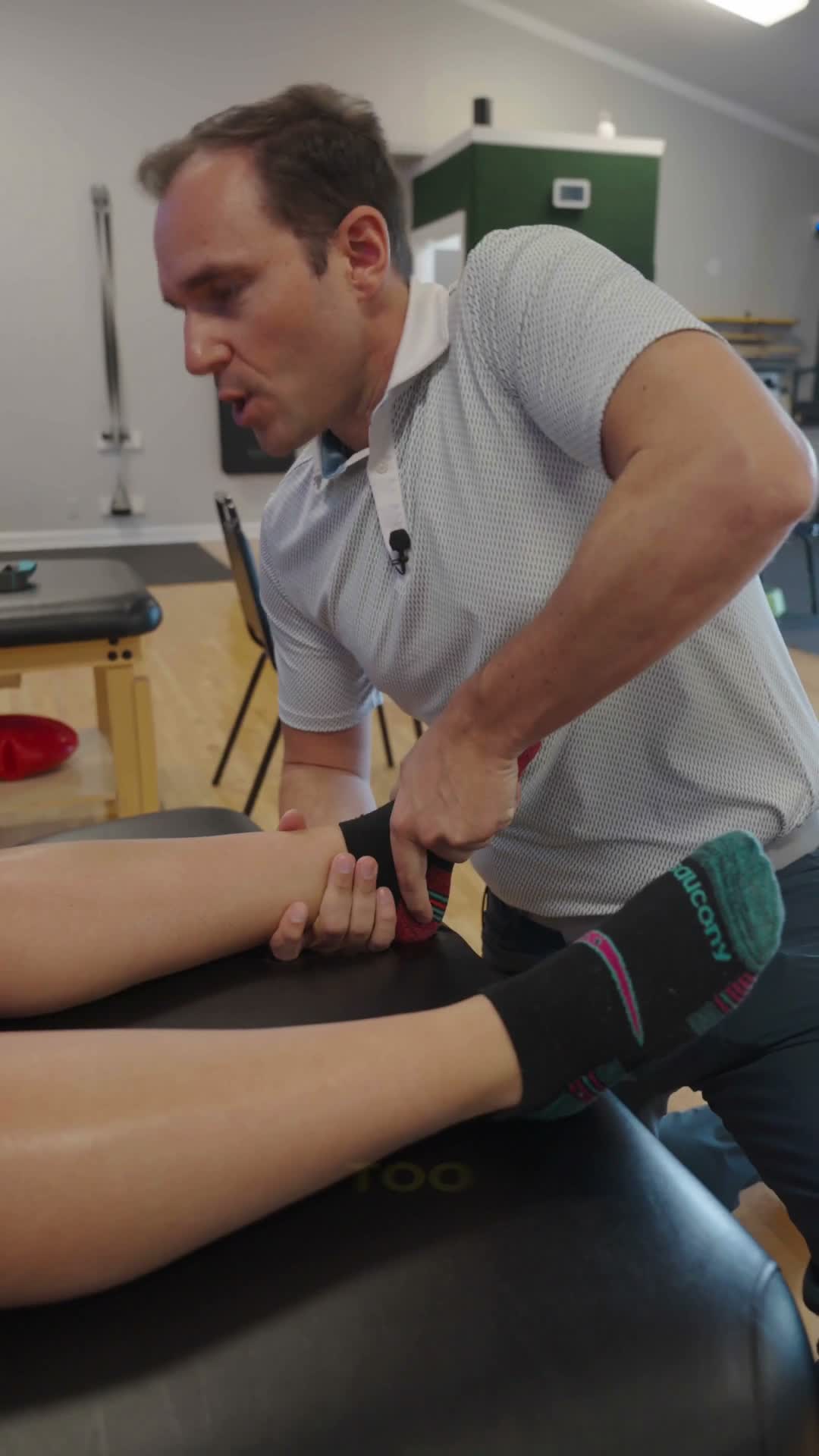
All right. Good luck over here first. Let me know like do this. Yeah, so I want you just keep moving it.
Oh keep rotating and then I’ll keep spraying you ready? All right, it’s gonna start 10 seconds. It’s too easy. All right.
No more. Is it cold? Give us a free test come check the surface tab. I think we plug in another one.
What’s the ad here? He’s getting down to 51 degrees 53 degrees. So it’s getting quite a bit cooler. I’d like to get you in the 40s if you can.
Leave a Reply