
Getting back to your sport after a concussion is not one decision, it is a series of small ones. The progression is built from short efforts followed by an honest report: run a little, say exactly how it felt, and add volume only when the answer comes back clean. That is how Dr. Joel is working Caroline back toward soccer, and the neck gets treated the whole way through.
Why ask for one lap when the target is three?
Because one lap gives you information and three laps can give you a setback. The point of the short effort is to find out what the system does with it before more is added.
Caroline is already up to three laps in her program. On this day the ask was one, then a check in on how she was feeling. If the report is clean, the next step gets bigger. If something creeps in, dizziness, pressure in the head, fog an hour later, that is useful and it changes the plan rather than ending it.
We’re gonna continue to progress Caroline back to running all the way.
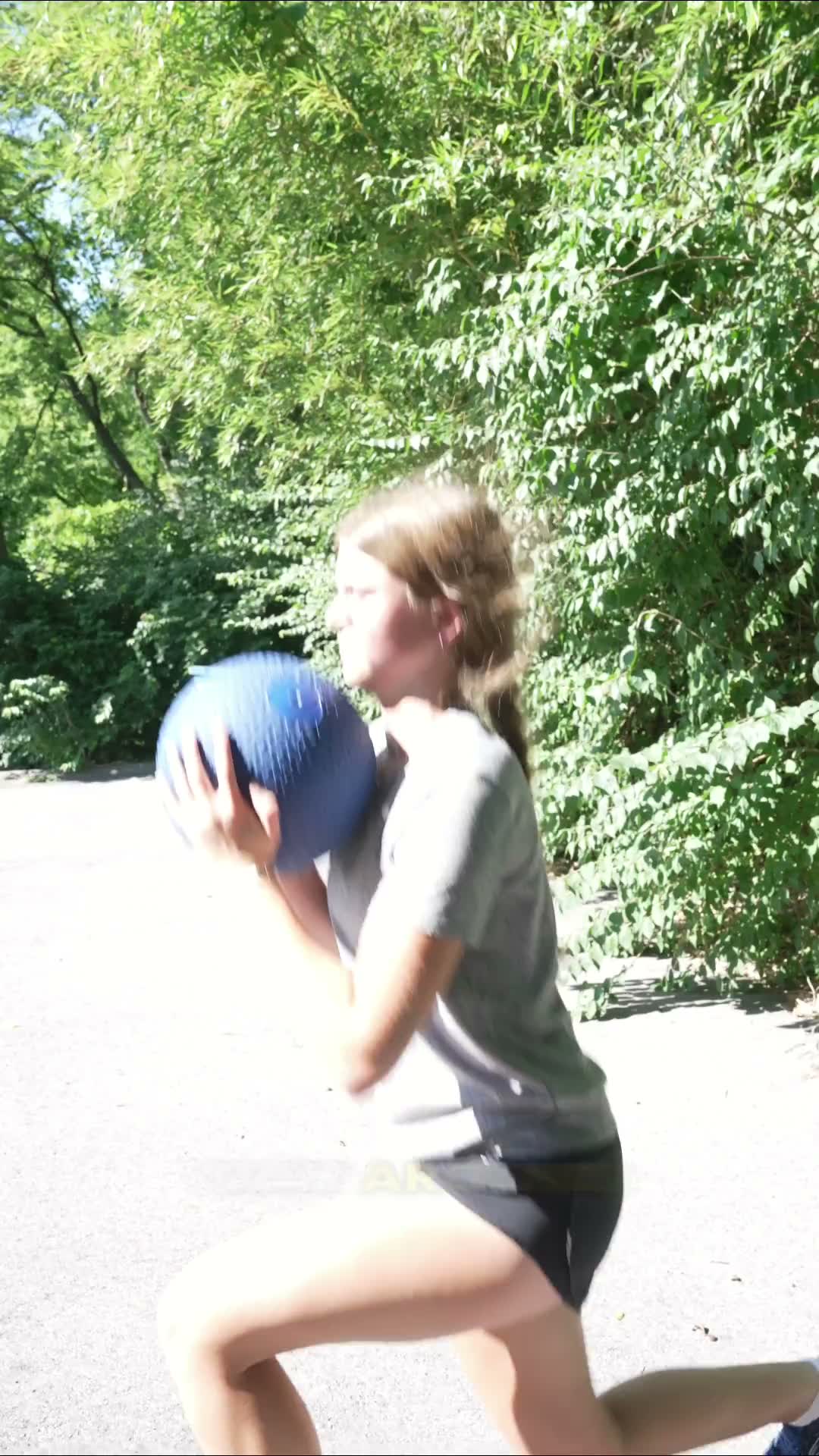
Why does her head stay still through the jump lunges?
Because large head motion during fast work was provoking the vestibular part of what she had going on. Head position is trained first, then speed is added on top of it.
The vestibular system is the balance system of the inner ear. It reports head tilt and head turn speed to the brain. After a concussion, those reports can lag behind what the eyes are seeing, and a hard drill is a poor moment to ask the brain to referee that disagreement. Holding the head still and upright takes one variable out, so the drill trains the legs and the heart instead of stacking a balance challenge on top. Head turns get added back later, graded, which matters because soccer is a sport played with the head moving constantly.
Does training in heat and humidity matter?
Yes, because conditions are part of the demand. An athlete who only trains in ideal weather has not been tested against what the season will actually ask.
Caroline has done this work in humidity before. A mild day outside is not the hard version, it is the pleasant one. Adding heat, uneven ground and real pace back in on purpose, in a controlled way, is how a program closes the gap between a rehab session and a match.
What if the season starts in three weeks instead of three months?
The order of the work stays the same. What changes is how the available time is spent.
| Time available | Where the effort goes |
|---|---|
| A long runway | Rebuild conditioning from the bottom, work every affected system, grade head motion back in slowly, steady neck care |
| A short runway | Target the one or two systems still provoking symptoms, dose exposure tightly, treat the neck often, protect the ability to keep training |
Neither version skips steps. The short runway simply spends less time on general work and more on the specific thing that is still limiting the athlete.
Why keep treating the neck when the injury was to the head?
The neck takes a load in the same event that caused the concussion, and the joints of the neck carry mechanoreceptors, the small nerves that report where the head is sitting.
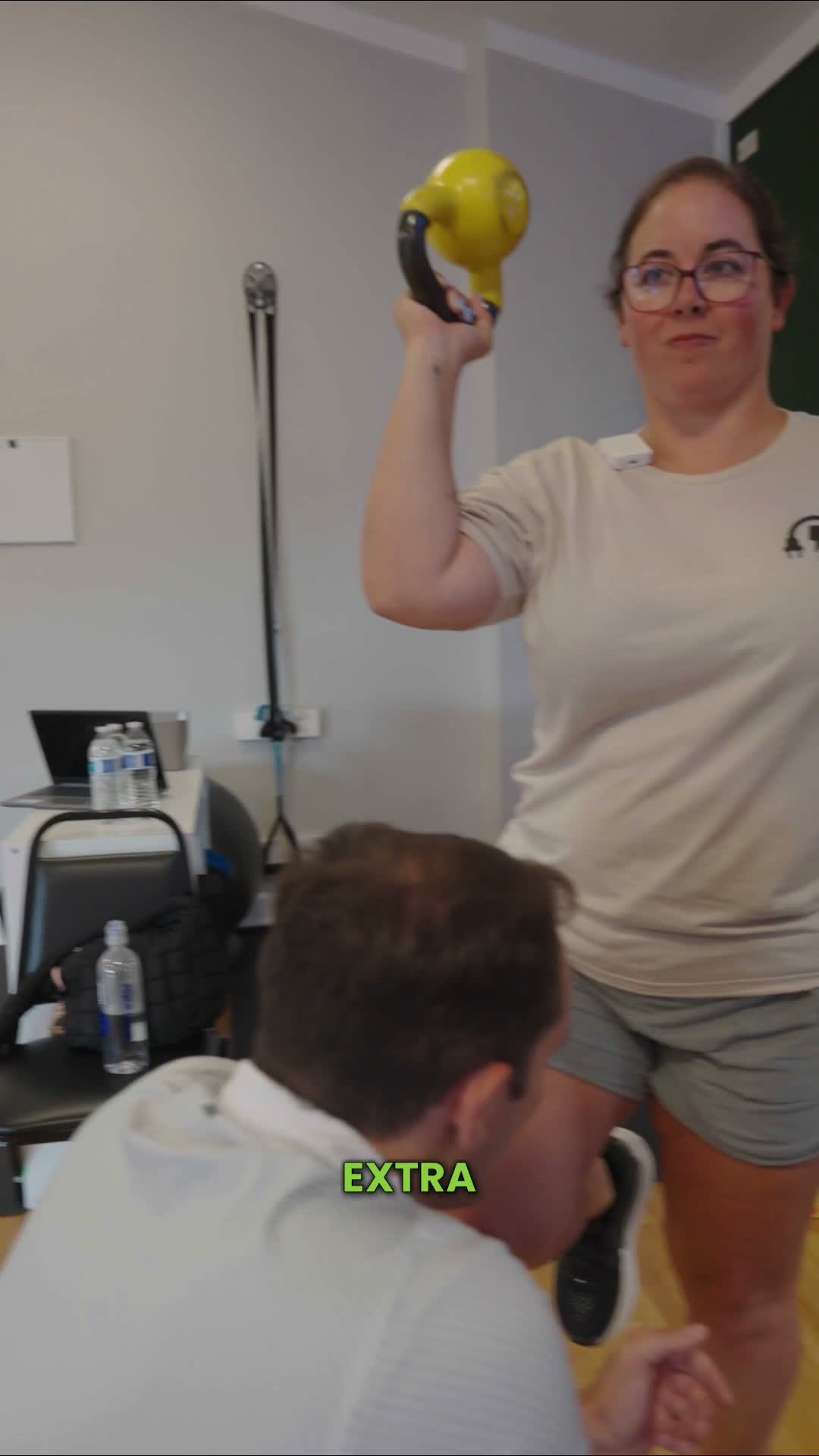
Think of three instruments feeding the same dashboard: the eyes, the inner ear, and the joints of the neck. When one of them is stiff and guarded, the readings disagree and the brain burns energy sorting that out. That is often felt as dizziness, headache or fog in a busy room. So we do a lot of soft tissue work on the neck and make sure it is adjusted well. It is the component that is most often overlooked, and when it is missed, people lose range of motion, get sore, guard harder, and management runs longer than it needed to.
Key points
- Short efforts plus honest reporting beat big jumps in volume.
- Head position is held steady early, and head motion is graded back in later.
- Heat, pace and real conditions are added back on purpose before the season.
- A close season date changes the emphasis, not the order, of the work.
- Neck care runs through the whole program, not just at the start.
Frequently asked questions
Can I run while I still have symptoms?
That depends on which symptoms, how severe they are, and what they do with effort. Graded exertion is usually tested in the office before it is assigned, so there is a known starting dose rather than a guess.
Why do busy environments feel worse than quiet ones?
A field or a store asks your eyes, inner ear and neck to track a lot of movement at once. If those systems are not agreeing yet, the extra input is harder to process, which many people feel as fog, fatigue or irritability.
How do I know I am ready to add volume?
The report after the last effort is the main guide: how you felt during, right after, and several hours later. Clean reports earn more volume. A flare means the dose was too big, not that the plan failed.
Does a stiff neck on its own cause dizziness?
It can contribute. Neck joints feed position information to the brain, so guarding and lost range of motion there often show up alongside balance complaints, which is why the neck gets examined and treated as part of concussion care.
If you are still dizzy, foggy or stiff through the neck weeks after a hit, book a new patient visit and we will test each system and build a progression you can actually report on. Active Sports Therapy is a sports chiropractic and rehabilitation practice in Hendersonville that works with athletes returning to their sport.
Active Sports Therapy · 123 Stadium Drive, Hendersonville, TN 37075 · 615-537-5520
Sources
- Patricios JS, et al. Consensus statement on concussion in sport: the 6th International Conference on Concussion in Sport, Amsterdam, October 2022. British Journal of Sports Medicine, 2023. https://doi.org/10.1136/bjsports-2023-106898 [verify: confirm DOI and page numbers before publishing]
- Schneider KJ, et al. Cervicovestibular rehabilitation in sport-related concussion: a randomised controlled trial. British Journal of Sports Medicine, 2014. https://doi.org/10.1136/bjsports-2013-093267 [verify: confirm DOI resolves to this trial]
- Centers for Disease Control and Prevention. HEADS UP: concussion information. https://www.cdc.gov/heads-up/
Transcript of the video
The big things with her if you notice that she’s keeping her head totally still an upright. That was something we definitely had to train with Caroline. She wanted to move her head all the way around and it was not helping anything with the vestibular component of what she’s got going on but a couple quick jump plunges there and now we’re ready to jog, so we’re up to three laps, but I want you just to give me one and let me know how you’re feeling. We’re gonna continue to progress Caroline back to running all the way.
It’s a beautiful day outside so lucky her she actually gets to do it, but she’s done this in the humidity before she’s killing it as an athlete or the other treatment we do for her is make sure that her neck is super loosened up. So we do a ton of soft tissue there and make sure it’s adjusted really well, but overall she’s been rehabbing great.
Leave a Reply